As parents, we want our children to feel capable, resilient, and confident in their abilities. While academic achievement is an important part of their development, confidence also grows through experiences that encourage independence, curiosity, and a willingness to take on new challenges.
When discussing the International Baccalaureate (IB) programme, the conversation often focuses on academic rigour and international standards. However, the IB approach also places considerable emphasis on developing the whole child. Through inquiry, reflection, collaboration, and meaningful learning experiences, students have opportunities to develop the self-assurance needed to approach new situations and recognize their own potential.
Here is a closer look at how the IB Primary Years Programme (PYP) and Middle Years Programme (MYP) support the development of confidence in students.
In the Primary Years Programme (PYP): Building Confidence Through Voice and Choice
The PYP encourages children to become active participants in their learning. Rather than simply receiving information, students are given opportunities to ask questions, explore ideas, make choices, and take increasing ownership of their educational experiences.
- Learning to Trust Their Own Voice: In the PYP, students have opportunities to influence how they explore topics and demonstrate their understanding. When children recognize that their questions, ideas, and perspectives are valued, they begin to develop confidence in their ability to contribute and make decisions.
- Learning Through Mistakes: PYP classrooms emphasize inquiry, exploration, and reflection rather than focusing exclusively on finding a single correct answer. Students are encouraged to consider different possibilities, learn from mistakes, and view challenges as opportunities for growth. Over time, these experiences can help children become more comfortable taking risks and trying unfamiliar approaches.
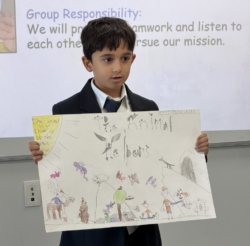
- The PYP Exhibition: As students approach the end of the PYP, they participate in the Exhibition, a student-led inquiry that allows them to investigate an issue or topic of personal significance. Students research, develop ideas, and share their learning with an audience. Presenting their work and explaining their thinking provides an opportunity to demonstrate independence, communication skills, and confidence in their abilities.
In the Middle Years Programme (MYP): Building Confidence Through Purpose and Independence
The adolescent years bring significant academic, social, and personal changes. As students become more independent, they also begin to consider how their learning connects to their interests and the world around them. The MYP provides opportunities to make these connections while developing the skills needed to approach increasingly complex challenges.
- Connecting Learning to Life: The MYP uses global contexts to help students understand how their learning connects to real-world issues and experiences. When students recognize the relevance of subjects such as mathematics, science, and language and literature, they can make meaningful connections and develop a stronger understanding of how knowledge can be applied beyond the classroom.
- The Personal Project: The MYP Personal Project gives students an opportunity to explore an area of personal interest through an extended independent project. Whether developing a creative work, researching a topic, or designing a product, students take responsibility for setting goals, managing their time, researching, and reflecting on their progress. Completing a project of their own choosing can strengthen their sense of ownership, independence, and confidence in their ability to see a challenging task through to completion.
- Understanding Expectations and Progress: MYP assessment uses established criteria to evaluate students’ understanding and development of skills. Clear expectations help students recognize what they are working towards and identify areas for improvement. Feedback and reflection become important parts of the learning process, helping students understand their progress and see how they can continue to grow.
The IB Learner Profile: Building Confidence Through Character
Confidence is not developed through academic achievement alone. It also grows as children learn to understand themselves, interact with others, and approach new experiences with an open mind.
The IB Learner Profile identifies ten attributes that support students in becoming thoughtful, responsible, and engaged members of their communities. Three examples illustrate how these attributes can contribute to confidence:
- Risk-takers: Students develop the courage to try unfamiliar activities, share their ideas, and approach challenges with thoughtful consideration.
- Reflective: Students consider their experiences, recognize their progress, and identify areas where they can continue to improve.
- Communicators: Students learn to express their ideas and feelings clearly, listen to different perspectives, and communicate respectfully with others.
These attributes are developed over time through everyday learning experiences, interactions, and opportunities for reflection.
Ultimately, confidence develops when students are given opportunities to take ownership of their learning, explore new ideas, and recognize their ability to overcome challenges. Through the IB programme, students build more than academic knowledge; they develop the independence, resilience, and self-assurance to approach new experiences with curiosity, contribute their perspectives, and continue growing as learners and individuals.