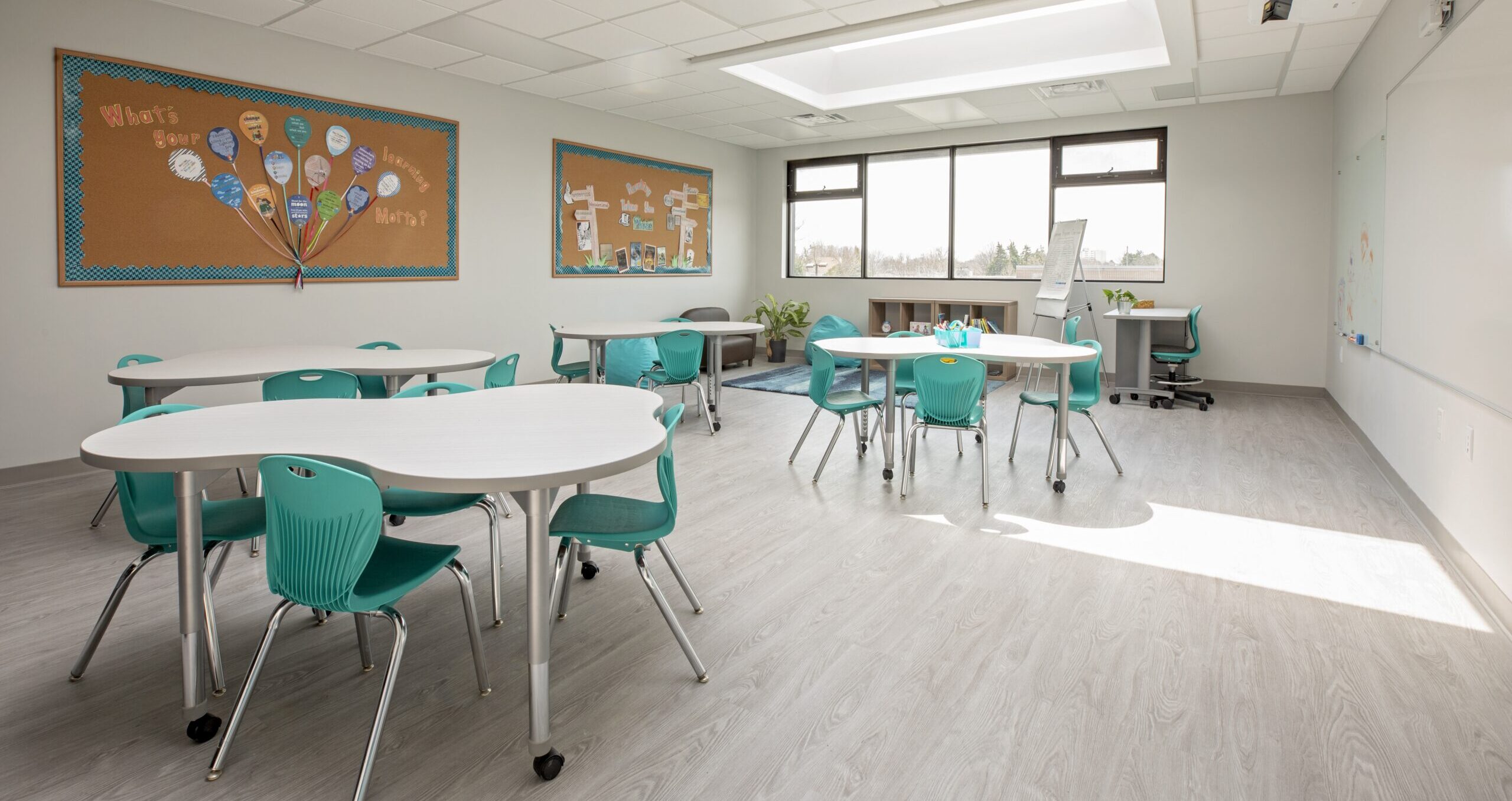
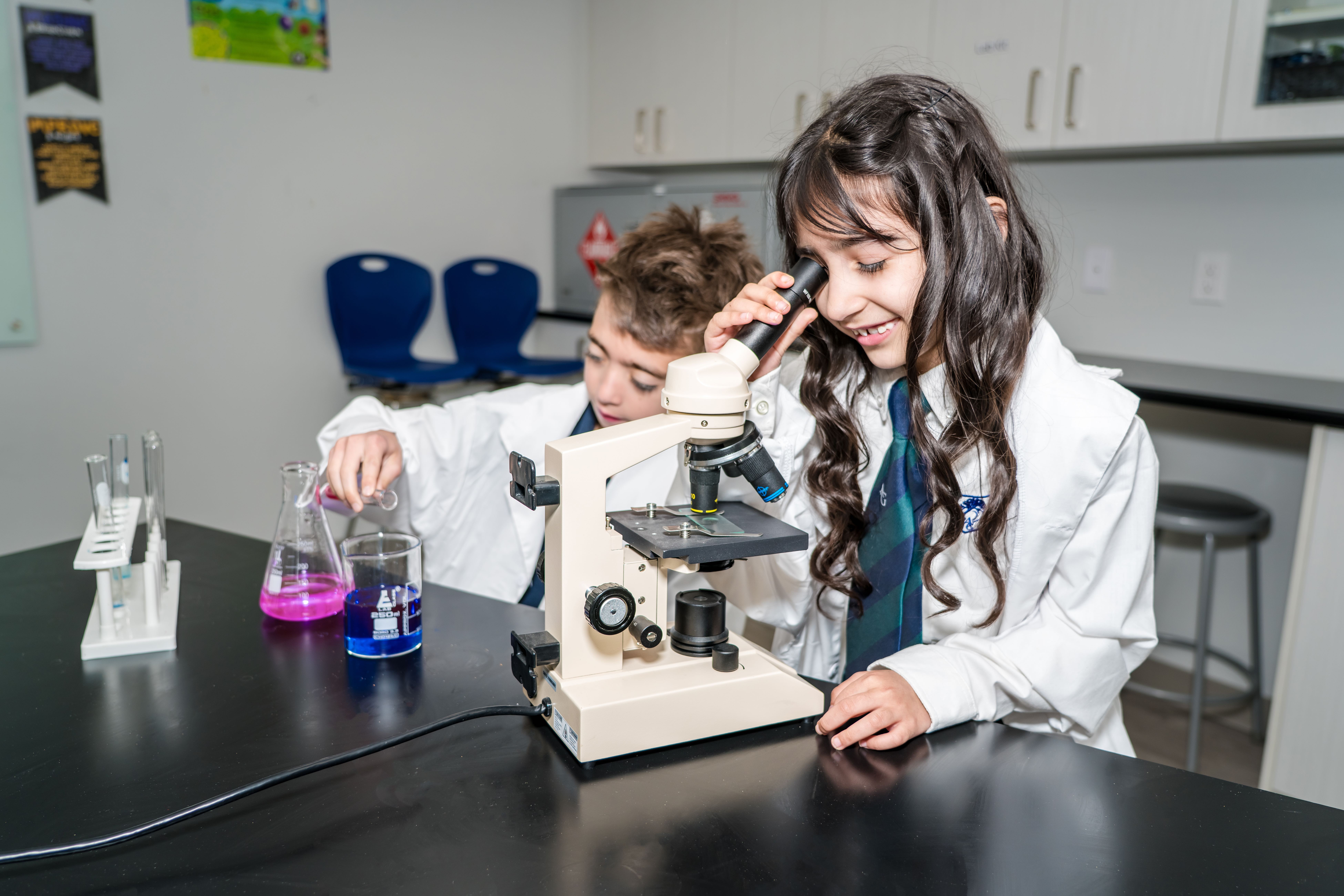
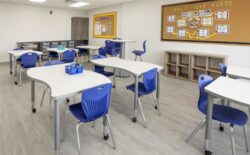
Walk into an IB classroom and you might notice something different. Students are moving between learning spaces, discussing ideas with classmates, building models, asking questions, and testing their thinking. At first glance, it may not look like a traditional classroom—and that’s by design.
It might seem like students have more freedom than structure. In reality, every aspect of the classroom is intentionally designed to help children think more deeply, collaborate with others, and take ownership of their learning.
Through inquiry-based learning in the IB Primary Years Programme (PYP), students explore, question, and reflect—building understanding that lasts long after the lesson ends.
The Classroom Is Part of the Learning
In an IB classroom, the learning environment is more than a place where lessons happen—it’s an active part of the learning experience.
Learning spaces are intentionally designed to encourage students to:
- Ask questions and explore ideas
- Collaborate with classmates
- Think independently
- Reflect on their learning
- Solve authentic problems
Students aren’t simply surrounded by desks and whiteboards. They’re surrounded by opportunities to investigate, create, collaborate, and make meaningful connections. In an IB classroom, the learning environment doesn’t just support learning—it helps inspire it.
Why Teachers Don’t Simply Give Students the Answers
One of the biggest misconceptions about inquiry-based learning is that students are left to discover everything on their own.
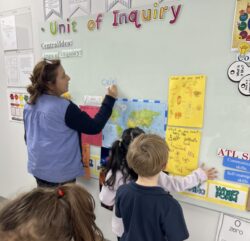
In reality, inquiry is carefully guided.
IB teachers design learning experiences, ask questions that deepen thinking, provide appropriate challenges, and encourage students to reflect on both what they learn and how they learn it. Rather than simply delivering information, teachers help students build understanding for themselves.
Why Discovery Leads to Deeper Learning
When students actively explore ideas instead of simply memorizing answers, they’re more likely to retain what they’ve learned and apply it in new situations. Research has consistently shown that this kind of active learning strengthens understanding, improves problem-solving, and helps students transfer knowledge beyond the classroom.
Just as importantly, it develops the habits of mind students will need in a rapidly changing world.
Preparing Students for the Future
Today’s graduates will enter careers that demand creativity, collaboration, adaptability, critical thinking, and lifelong learning. These aren’t skills that develop through memorization alone—they grow through curiosity, reflection, communication, and authentic problem-solving.
At Ashwood Glen, we believe the classroom is more than a place where learning happens. It’s where curiosity is nurtured, confidence is built, and the skills students need for the future begin to take shape. Through inquiry-based learning, thoughtfully designed environments, and personalized support, we prepare students not only for their next grade—but for an ever-changing world.